

UPDATE: EsoRepair is selling out due to high demand. Secure your bottle on the official site only. [ORDER HERE]

You went to the doctor with a cough, hoarseness, and a lump in your throat. They said "GERD" and gave you a PPI. You took it for weeks. Maybe months.
The heartburn got a little better. But the cough stayed. The throat clearing stayed. The voice stayed hoarse. The lump didn't move.
So you went back. They increased the dose. Still nothing. They tried a different PPI. Same result. And eventually someone said: "Well, the medication should be working. Maybe it's not reflux after all."
But it IS reflux. Just not the kind they were treating.
What you likely have is LPR - laryngopharyngeal reflux. It's related to GERD but it's a fundamentally different condition. It damages different tissue, causes different symptoms, and needs a different approach. And treating LPR like GERD is the single most common reason people spend years taking medication that doesn't fully work [1].

This is the most important distinction you'll learn today. Once you understand it, everything about your condition - why the PPI only half-worked, why the cough won't quit, why your endoscopy was "normal" - suddenly makes sense.
GERD (Gastroesophageal Reflux Disease):
- Acid refluxes into the lower esophagus
- The lower esophageal sphincter (LES) is the problem valve
- 80% of patients feel heartburn - the classic burning behind the breastbone
- Your esophagus has built-in defenses: acid-neutralizing enzymes, thick stratified lining, and rapid clearing mechanisms
- Can handle up to 50 reflux episodes per day before tissue damage accumulates
- PPIs work well - reducing acid addresses the primary damage mechanism
- Standard treatment: 8 weeks of PPI therapy
LPR (Laryngopharyngeal Reflux):
- Reflux travels HIGHER - past the upper esophageal sphincter into your throat, larynx, and airway
- The upper esophageal sphincter (UES) is the problem valve
- Only 20% of patients feel heartburn - that's why it's called "silent" reflux [2]
- Your larynx has NONE of those protective mechanisms - no acid-neutralizing enzymes, no thick lining, no rapid clearing
- As few as 3 reflux episodes cause damage to laryngeal tissue [3]
- PPIs help partially but 40-50% of patients don't respond adequately [4]
- Requires minimum 6 months of treatment, not 8 weeks [5]
Your throat is 100 times more vulnerable to acid than your esophagus. Yet the standard treatment - a PPI designed for the stomach and lower esophagus - is the same for both conditions. That's the gap.

If your main symptoms are:
Heartburn, chest burning after meals, acid taste when lying down, pain behind the breastbone, regurgitation
= Classic GERD. Your lower esophagus is the primary damage site.
If your main symptoms are:
Throat clearing, hoarseness, lump in throat, chronic cough, post-nasal drip feeling, morning throat soreness, difficulty swallowing, excess mucus
= Likely LPR. Your throat and larynx are the primary damage sites.
If you have symptoms from both lists:
= You may have both. 30-50% of GERD patients also have LPR symptoms [6]. Many people have reflux damaging both the lower esophagus AND the upper airway simultaneously.
The critical question: Is your treatment addressing all the tissue that's being damaged - or just the lower half?

PPIs are excellent at what they do: suppress acid production. For classic GERD, that's often enough because acid is the primary damage agent in the lower esophagus.
But LPR has three damage agents, not one:
1. Acid - PPIs address this. But even small amounts of acid that slip through cause disproportionate damage to throat tissue because it has no protective barrier.
2. Pepsin - A digestive enzyme that gets absorbed into your laryngeal tissue and stays there, even after the reflux episode is over. Pepsin reactivates whenever ANY acid reaches your throat - even from food or drink. PPIs cannot remove pepsin that's already embedded in tissue [7].
3. Bile salts - In non-acid reflux, bile from the duodenum can travel upward and damage tissue through a completely different mechanism than acid. PPIs have zero effect on bile [8].
This is why the research shows that barrier agents - substances that physically coat and protect tissue - are now recommended alongside PPIs for LPR, especially for reflux-related cough [9]. The approach needs to shift from "suppress acid" to "coat, protect, and support the tissue."

Research shows that reflux causes damage through two simultaneous pathways [10]:
Direct damage (aspiration): Acid, pepsin, and bile physically contact and erode tissue in both the esophagus and the throat/airway. This is what causes burning, erosions, hoarseness, and cough.
Indirect damage (vagus nerve reflex): Acid in the lower esophagus triggers a nerve reflex through the vagus nerve that causes bronchospasm, cough, throat tightening, and even heart palpitations - without acid ever reaching the throat.
This means you can have throat symptoms from GERD even without LPR. And you can have esophageal damage from LPR even without heartburn. The two conditions feed each other.
The implication: Effective support needs to address the entire tract - lower esophagus, upper esophagus, AND throat. Not just one zone.

EsoRepair was developed by a gastroenterologist who understood the fundamental problem: pills drop past everything. They skip your throat, your larynx, your upper esophagus - and land in your stomach. The tissues above? They get nothing.
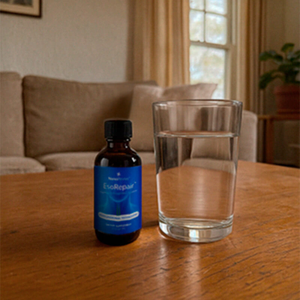
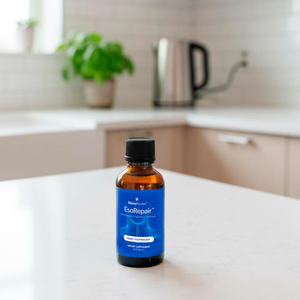
EsoRepair is a liquid you sip slowly. As it moves down, it coats the entire tract - throat, larynx, upper esophagus, and lower esophagus. Whether you have GERD, LPR, or both, the active ingredients make contact with every tissue that needs support.
For GERD symptoms (lower esophagus):
- Sodium alginate creates a protective raft above stomach contents, reducing how much acid reaches the esophagus
- Zinc-L-Carnosine adheres to damaged lower esophageal tissue and supports integrity
- L-Glutamine fuels the cells that line the esophagus - the building blocks of tissue renewal
For LPR symptoms (throat and larynx):
- Marshmallow root and slippery elm form a mucilage coating that physically shields irritated throat tissue on contact
- Alginate also blocks pepsin and bile salts - addressing the non-acid damage PPIs miss [8]
- Hyaluronic acid and chondroitin sulfate form a film-like barrier over pepsin-depleted laryngeal tissue
For both:
- DGL licorice boosts natural mucus production throughout the entire tract
- Quercetin and Vitamin D3 provide antioxidant support and support a healthy inflammatory response
- Aloe vera supports digestive comfort from top to bottom
Alginates Block Pepsin + Bile
Research shows alginates inhibit pepsin AND bile salts - the LPR damage agents PPIs miss [8]
60% Cough Improvement
Clinical data shows 60% improvement in reflux-related cough at 3 months [11]
60% Less Tissue Damage
Zinc-L-Carnosine protected esophageal tissue during oxidative stress [12]
9 of 10 Soothed in 10 Min
Marshmallow root mucilage delivered rapid throat comfort in surveys [13]
*Results based on published studies of individual ingredients. Doses and forms may differ. Individual results vary. Not intended to diagnose, treat, cure, or prevent any disease.
Whether your damage is in the lower esophagus (GERD), upper airway (LPR), or both - tissue recovery follows the same timeline. LPR tissue heals slower, which is why the protocol runs 90 days minimum. Research shows 60% improvement in reflux-related cough at 3 months [11].

Mucilage botanicals and alginate coat the full tract - from throat to lower esophagus. Users describe less burning (GERD), less throat clearing (LPR), smoother swallowing, and fewer nighttime disruptions. The raft mechanism begins blocking acid from reaching higher tissue.

Hyaluronic acid, chondroitin sulfate, and glutamine support tissue maintenance at both damage sites. GERD users report less post-meal burning. LPR users report voice improvement and cough reduction. Both report more confidence eating without the constant "what if" calculation.

Aloe vera, DGL licorice, and quercetin support mucosal resilience and a healthy inflammatory response throughout the tract. Fewer trigger days. The vagus nerve calms down as tissue inflammation decreases - which means fewer of those "phantom" symptoms that seem to come from nowhere.

Your entire esophageal and upper airway tract is functioning differently. The heartburn is quieter. The throat clearing has stopped. The cough is gone. The voice holds. For people who had both GERD and LPR, this is often the first time in years that ALL their symptoms improved together.
Backed by a 90-day money-back guarantee. Full refund if you don't see a meaningful difference.

"Nothing touched the lump-in-throat feeling. Food felt stuck, my voice was hoarse, and lying flat was impossible. This is the first thing that actually soothed my esophagus. Within weeks, swallowing felt normal and my voice came back."
"I went to the ER twice because the chest burn felt like heart issues. I'd wake up with acid in my mouth every morning and sleep sitting up. Four weeks in, I slept through the night for the first time in years. The panic and palpitations are finally quiet."

"These issues wrecked my mental health. I was terrified of every meal and living in constant flare-up fear. Two months in, I can eat without rehearsing disaster. I feel calmer, clearer, and like myself again."
"I have GERD but also throat symptoms. Is that normal?"
Very common. 30-50% of GERD patients also have LPR symptoms. Reflux can damage both the lower esophagus (heartburn) and the upper airway (cough, hoarseness, throat clearing) simultaneously. EsoRepair coats the entire tract, so both damage zones get support.
"I have throat symptoms but no heartburn. Could it still be reflux?"
Yes - this is the hallmark of LPR. Fewer than 20% of LPR patients feel heartburn. The acid reaches your throat without triggering the classic burning sensation. That's why it's called "silent" reflux and why it gets missed so often.
"I'm already on a PPI. Should I add this?"
Most of our customers use EsoRepair alongside their PPI. The PPI reduces acid production. EsoRepair coats and supports the tissue that PPIs can't reach - especially the throat and upper esophagus. It also addresses pepsin and bile, which PPIs don't touch. Always consult your doctor about your routine.
"How long until I see improvement?"
GERD symptoms (burning, chest pain) often improve first, in weeks 1-3. LPR symptoms (cough, voice, throat clearing) take longer because throat tissue heals slower. Clinical guidelines recommend 3-6 months for LPR. The 90-day guarantee covers the full window.
"It's expensive."
$1.63/day on subscription. How much have you spent on medications, specialists, and over-the-counter remedies that only addressed half the problem? 90-day money-back guarantee - zero risk.

- Doctor-formulated - 11 research-backed ingredients
- Liquid nano delivery - coats ENTIRE tract (throat to lower esophagus)
- Addresses acid, pepsin, AND bile - not just acid alone
- Works for GERD, LPR, or both
- 90-day money-back guarantee
Your PPI was designed for your stomach. Your throat has been on its own this entire time. EsoRepair is the first formula designed to support the full esophageal and upper airway tract - from your larynx to your lower esophagus - in one liquid dose.
Whether you have GERD, LPR, or both, try it risk-free with 30% OFF.
[1] PMC11056915. LPR: Updated examination of mechanisms, pathophysiology, treatment. World J Gastroenterol. 2024.
[2] StatPearls. Heartburn in 20% of LPR vs 80% of GERD patients.
[3] Koufman JA. Otolaryngologic manifestations of GERD. Laryngoscope. 1991.
[4] El-Serag H, et al. Persistent reflux symptoms on PPI therapy. Aliment Pharmacol Ther. 2010.
[5] Stanford LPR Protocol. Minimum 6-month treatment, twice-daily PPI dosing required.
[6] PMC7465150. 20-60% of GERD patients have head/neck symptoms.
[7] Johnston N, et al. Pepsin in laryngeal biopsies. Ann Otol Rhinol Laryngol. 2007.
[8] PMC9012673. Alginates inhibit pepsin and bile salts as adjunct to PPI therapy.
[9] Brigham 2025. Barrier agents recommended for reflux-induced cough.
[10] PMC7465150. Direct aspiration AND vagal reflex both cause extra-esophageal symptoms.
[11] ScienceDirect 2020. 60% improvement in reflux-related cough at 3 months.
[12] Hayashi K, et al. Polaprezinc protects against esophagitis. Int J Clin Oncol. 2016.
[13] Fink C, et al. Marshmallow root for irritative cough. Complement Med Res. 2018.

- 90-day money back guarantee
- Best-selling esophageal support formula
- Up to 58% off on subscription
- Limited supply, order fast
- 30% OFF today only